Basement Flooding Cleanup in Buffalo, NY
Below-grade water pumped out and the whole basement dried down to the slab, with local water damage crews reaching Buffalo.
☎ (716) 454-3793Tap to call the 24/7 Buffalo dispatch line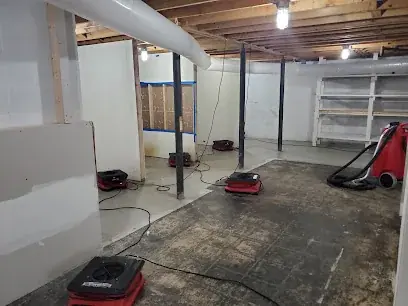
A flooded basement is the most common water loss in Buffalo, because roughly 85 percent of local homes have one and the water table runs high across South Buffalo, the Valley, and the waterfront. Buffalo water damage pros answer live 24/7 and reach the metro fast to pump the below-grade water out, dry the space down to the slab, and keep the damage from climbing the walls. This page is about standing water in the basement itself, whatever pushed it in.
What floods Buffalo basements
Below-grade flooding rarely has one cause, but the local pattern is clear once the snow starts to melt and the heavy rain arrives.
- Spring snowmelt and a rapid thaw sending surface water against old stone and block foundations.
- Seepage through foundation cracks and cold joints when the ground outside is saturated.
- Sewer surcharge in the aging combined sewers, backing water up through the floor drain in heavy rain.
- Downspouts and grading that dump roof water right against the wall instead of away from the house.
If the water is coming up through the floor drain and smells, treat it as contaminated and call the sewage and black-water cleanup crew rather than wading in.
Water rising in the basement? Move what you can off the floor, stay clear of outlets and the panel, and call. A Buffalo crew responds across the metro, 24/7, to pump out and dry down.
☎ Call (716) 454-3793How the crew cleans up a flooded basement
The order matters, because a basement holds water against porous block, concrete, and whatever is stored down there. The crew works top to bottom so the space actually dries instead of just looking dry.
- Pump and extract the standing water with submersible pumps and truck-mounted units.
- Remove soaked storage, cardboard, and wet carpet or pad that will not dry safely.
- Detach the bottom of finished drywall and insulation where water wicked up, so the cavity can dry.
- Set air movers and dehumidifiers, then monitor with meters until the slab and walls hit dry standard.
Drying block and concrete below grade takes longer than a main-floor loss, so the structural drying and dehumidification team stays on it, and the water extraction crew handles the initial pump-out. You can preview the timeline with the drying-time estimator.
Dry the wall, not just the floor
The worst basement damage hides in the bottom foot of drywall and behind the paneling, where water wicks up and sits. Pumping the floor and running a fan is not enough. The cavity has to be opened and dried or the mold and rot start there.
Buffalo basements and the winter angle
Deep freezes and the spring thaw make below-grade flooding a seasonal event here, and an unheated cellar can turn a slow seep into a real emergency overnight. If you want to know how exposed your basement is before the next thaw, run the freeze and basement risk check. When the pump that is supposed to hold the water back quits, the sump-pump failure cleanup crew covers that specific failure. The EPA has practical guidance on drying a flooded home safely at the EPA WaterSense resource, and the National Weather Service posts local flood watches at the NWS Buffalo page.
Insurance for a flooded basement
How a basement claim goes depends on the source. A sudden pipe or appliance failure is usually covered by a standard homeowners policy, while groundwater and surface flooding often need separate flood coverage, and sewer backup needs its own endorsement. The crew documents the source and the loss with dated photos, moisture readings, and a written scope, and you can size the loss up front with the water damage cost calculator. Coverage depends on your policy, so it is worth checking with your own insurer.html">water damage cost calculator.
How basement flooding cleanup is handled in Buffalo
Call & dispatch
The response team answers 24/7, and the nearest Buffalo crew heads out with truck-mounted pumps, air movers, and moisture meters.
On-site assessment
The crew traces the source and the full reach of the water, including what soaked into subfloor, drywall, and wall cavities.
Extract & dry
The extraction crew pulls the standing water, then runs air movers and LGR dehumidifiers to a verified dry standard, not just the surface.
Verify & document
Moisture readings are logged until the structure is dry, then the loss is documented with the photos and daily readings an adjuster needs.
Why Buffalo calls the local water pros first
Rapid local response
The response team answers 24/7, and the nearest Buffalo crew heads out the moment you call, any hour, any block.
IICRC S500 drying standard
Trained crews with truck-mounted pumps, air movers, and moisture meters who dry to a verified standard, not a mop and a shop vac.
Claim-ready documentation
The loss is documented with photos and daily moisture readings, the paperwork an adjuster needs to move a claim.
Local Buffalo water experts
Old cellars, stone foundations, ice dams, and lake-effect thaws, so the local pros know how water moves in a Buffalo home.
Coverage across every Buffalo neighborhood
The response team covers the city and the Northtowns and Southtowns, day or night.
Buffalo water damage pros cover the whole metro, day or night, with rapid local response.
Coverage runs across North Buffalo, the West Side, South Buffalo, Kenmore, Tonawanda, Amherst, Williamsville, Cheektowaga, West Seneca, Lackawanna, and every Buffalo neighborhood.
See every neighborhood and ZIP covered ›Related restoration services
Buffalo water damage questions, answered
My basement is flooding right now, what should I do first?
Stay out of the water if it is near outlets, the panel, or the furnace, and cut power to the area only if you can reach the breaker safely. Move valuables and anything on the floor to higher ground and take photos. Then call (716) 454-3793 and a crew heads your way.
How fast can you get here?
The crew answers the phone live 24 hours a day and reaches the Buffalo metro, from South Buffalo and the Valley out to West Seneca, Cheektowaga, and Tonawanda. Fast pump-out keeps the water from wicking up the walls.
How much does basement flooding cleanup cost in Buffalo?
It depends on how deep the water got, how much finished space is involved, and whether the water is clean or contaminated. When the loss is sudden and covered, most homeowners pay only their deductible. The crew assesses on-site and you can size a range first with the cost calculator.
Does homeowners insurance cover a flooded basement?
It depends on the source. A sudden pipe or appliance failure is usually covered, while groundwater and surface flooding often need separate flood coverage, and sewer backup needs its own endorsement. The crew documents the source and loss so your claim is clear, and coverage depends on your policy, so it is worth checking with your own insurer.
Do I have to gut a finished basement after it floods?
Not always. The crew often saves a finished basement by removing only the soaked bottom of the drywall and insulation, then drying the cavity and the block behind it. What gets replaced depends on how long the water sat and whether it was clean or contaminated.
Why does my basement flood every spring?
Buffalo sees rapid thaw and snowmelt against old stone and block foundations, and the water table runs high in South Buffalo, the Valley, and near the waterfront. Saturated ground seeps through cracks and cold joints, and combined sewers can surcharge back up the floor drain in heavy rain.
How long does it take to dry a flooded basement?
Longer than a main-floor loss, because concrete and block hold water. Most basements dry in three to five days with air movers and dehumidifiers running, and the crew monitors with meters until the slab and walls reach dry standard rather than guessing.
The water came up through the floor drain, is that different?
Yes. Water backing up through a drain is usually sewer water and is treated as contaminated black water, which needs protective gear and disinfection. The sewage and black-water crew handles that safely instead of treating it like clean seepage.
Buffalo's water damage crew is standing by
Water sitting means damage growing. Call WNY Restoration and a Buffalo crew heads out, day or night.
(716) 454-3793Tap to call, a local person answers 24/7