Water Heater Failure Cleanup in Buffalo, NY
A ruptured or leaking water heater cleaned up fast in Buffalo, with local water damage crews that extract the flood and dry the basement before it warps and molds.
☎ (716) 454-3793Tap to call the 24/7 Buffalo dispatch line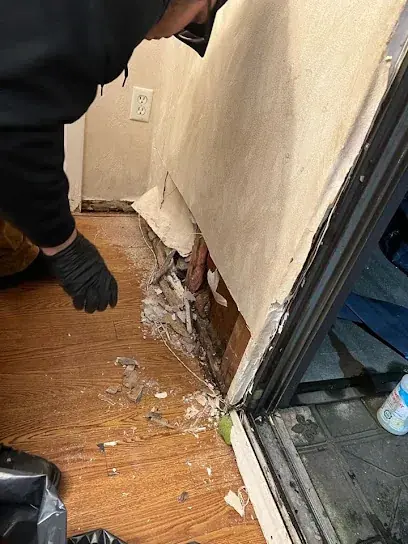
A water heater holds forty to eighty gallons, and when the tank rusts through or a fitting lets go it can empty all of it onto a basement floor and keep refilling until the supply is shut. Buffalo water damage pros answer live 24/7 and reach the metro fast to stop the flow, extract the water, and dry the basement or utility closet before it soaks into the walls and framing. The crew handles the water side of the loss and coordinates the plumber for the tank swap.
Why water heaters fail in Buffalo homes
Tanks have a life span, and Buffalo's very old housing stock means a lot of them are living on borrowed time in a damp cellar. Most failures fall into a few patterns.
- Age and internal corrosion: a steel tank rusts from the inside and eventually splits along a seam, usually after eight to twelve years.
- A failed temperature and pressure relief valve or a corroded supply connection that lets go under pressure.
- Sediment buildup from hard water that accelerates rust at the bottom of the tank.
- Damp basement conditions across older neighborhoods like Black Rock, Lovejoy, and Broadway-Fillmore that speed corrosion on the tank and fittings.
The Department of Energy has a useful primer on water heating and tank life worth a read when you replace yours.
Water heater flooding the basement? Shut the water supply valve on top of the tank and cut its power or gas, then call. A Buffalo crew responds across the metro, 24/7, to extract and dry.
☎ Call (716) 454-3793First steps when the tank lets go
A few quick moves limit the damage before the crew arrives.
- Shut the cold supply valve on the pipe entering the top of the tank, or the main if you cannot reach it, since a ruptured tank keeps refilling and re-flooding until the supply is off.
- Turn off the heater: the gas control valve on a gas unit, or the breaker on an electric one, because a tank running dry can be damaged or dangerous.
- Stay out of standing water near the panel or outlets until power to the area is safely off.
- Move stored belongings up off the wet floor and take a few photos for your claim.
The flood spreads farther than the puddle
Water from a failed tank runs under the furnace, into wall bases, and along the slab to the lowest corner. The floor can look nearly dry while the block and the bottom of the drywall stay soaked, which is why a moisture check beats a mop every time.
What WNY Restoration does on-site
The crew extracts the standing water, then dries the basement or utility closet structure with air movers and dehumidifiers, checking the slab, block, and lower walls with moisture meters until they read dry. Fast drying also stops mold before it starts in the damp lower level, and the EPA mold cleanup guidance explains why drying within a day or two is the goal. Because a tank failure is a form of sudden pipe-side flooding, it overlaps closely with the burst pipe cleanup, and if the water reached across a finished lower level the basement flooding cleanup crew handles the rest. The core pump-out and dry-out is the water extraction and removal service, and you can gauge the timeline with the drying time estimator. The crew documents the loss the way adjusters expect, and coverage depends on your policy, so it is worth checking with your own insurer.
How water heater failure cleanup is handled in Buffalo
Call & dispatch
The response team answers 24/7, and the nearest Buffalo crew heads out with truck-mounted pumps, air movers, and moisture meters.
On-site assessment
The crew traces the source and the full reach of the water, including what soaked into subfloor, drywall, and wall cavities.
Extract & dry
The extraction crew pulls the standing water, then runs air movers and LGR dehumidifiers to a verified dry standard, not just the surface.
Verify & document
Moisture readings are logged until the structure is dry, then the loss is documented with the photos and daily readings an adjuster needs.
Why Buffalo calls the local water pros first
Rapid local response
The response team answers 24/7, and the nearest Buffalo crew heads out the moment you call, any hour, any block.
IICRC S500 drying standard
Trained crews with truck-mounted pumps, air movers, and moisture meters who dry to a verified standard, not a mop and a shop vac.
Claim-ready documentation
The loss is documented with photos and daily moisture readings, the paperwork an adjuster needs to move a claim.
Local Buffalo water experts
Old cellars, stone foundations, ice dams, and lake-effect thaws, so the local pros know how water moves in a Buffalo home.
Coverage across every Buffalo neighborhood
The response team covers the city and the Northtowns and Southtowns, day or night.
Buffalo water damage pros cover the whole metro, day or night, with rapid local response.
Coverage runs across North Buffalo, the West Side, South Buffalo, Kenmore, Tonawanda, Amherst, Williamsville, Cheektowaga, West Seneca, Lackawanna, and every Buffalo neighborhood.
See every neighborhood and ZIP covered ›Related restoration services
Buffalo water damage questions, answered
What do I do the moment my water heater bursts?
Shut the cold water supply valve on top of the tank so it stops refilling, then cut its power at the breaker or turn off the gas control valve. Stay out of standing water near outlets and the panel. Then take a few photos and call (716) 454-3793.
How fast can you get here?
Buffalo water damage pros answer live 24/7 and reach the metro fast. A ruptured tank can empty forty to eighty gallons and keep refilling, so getting the water out quickly keeps it from soaking into walls and framing.
How much does water heater flood cleanup cost in Buffalo?
It depends on how much water escaped, how far it spread, and whether it reached a finished lower level. When the loss is sudden and covered, most homeowners pay only their deductible. The crew assesses on-site, documents for your claim, and coverage depends on your policy, so it is worth checking with your own insurer.
Will insurance cover a burst water heater?
Usually yes for the sudden and accidental water damage the failure causes, which is what most homeowners policies are built for, though the tank itself is often not covered. The crew documents the failure with dated photos and moisture readings so the sudden nature of the loss is clear, and coverage depends on your policy, so it is worth checking with your own insurer.
Do you replace the water heater too?
The crew handles the water damage side, the extraction, drying, and cleanup, and the crew coordinates a plumber for the new tank. The crew makes sure the basement or closet is dried to a real moisture reading before the space is put back together.
How long do water heaters usually last?
Most tank water heaters last about eight to twelve years, and hard water and a damp basement can shorten that. If yours is near that age and showing rust at the base or fittings, it is worth replacing before it fails and floods the floor.
Can a slow tank leak cause real damage?
Yes. A slow drip from a corroded tank or valve can keep the slab and wall base damp for weeks, feeding mold and rot before you notice a puddle. Fast drying stops mold before it starts, so even a small leak deserves a moisture check.
Do you dry the space or just remove the water?
Both. Removing the standing water is only the first step, because the block, slab, and lower walls stay wet after the floor looks dry. The crew runs air movers and dehumidifiers and confirms with moisture meters so the space is truly dry, not just mopped.
Buffalo's water damage crew is standing by
Water sitting means damage growing. Call WNY Restoration and a Buffalo crew heads out, day or night.
(716) 454-3793Tap to call, a local person answers 24/7