Structural Drying & Dehumidification in Buffalo, NY
Air movers and LGR dehumidifiers dry your Buffalo home or basement to a verified dry standard, with local water damage crews on-site fast and reading moisture daily.
☎ (716) 454-3793Tap to call the 24/7 Buffalo dispatch line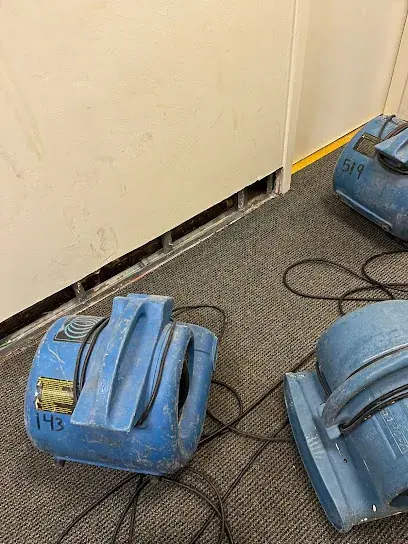
Pulling the standing water out is only half the job. The water that soaked into drywall, subfloor, and framing is what quietly rots a Buffalo house and feeds mold, so it has to be dried back to a measured dry standard, not just wiped down. Buffalo water damage pros answer live 24/7 and reach the metro fast then sets a drying plan and reads the moisture every day until the structure is proven dry.
What structural drying actually means
Structural drying is the science of removing bound moisture from the building materials themselves. A floor can feel dry on top while the subfloor and the joists under it still hold enough water to warp the boards and grow mold within a day or two. The crew measures the real moisture content with meters, sets a target based on the dry, unaffected parts of the same materials, and dries to that number.
- High-velocity air movers strip the wet boundary layer off surfaces so water evaporates faster.
- LGR (low grain refrigerant) dehumidifiers pull that evaporated moisture out of the air so it cannot resettle into dry materials.
- Moisture meters and thermal imaging map the wet area so the crew dries the whole footprint, not just the visible edge.
- Daily readings tell us the structure is trending dry, and a final set confirms it hit the standard before the crew pulls equipment.
Floor looks dry but the wall still feels damp? That trapped moisture is what causes the real damage. Call now and a Buffalo crew responds across the metro, 24/7, to dry the structure properly.
☎ Call (716) 454-3793How the crew dries a Buffalo structure to a verified dry standard
Every loss gets a plan sized to the water class and the materials. Once the water extraction crew has cleared the standing water, the crew calculates how many air movers and how much dehumidification the space needs, then places the equipment to move air across every wet surface. If a wall cavity is wet the crew makes controlled openings and dries the cavity rather than sealing a damp wall back up.
The crew comes back daily to log moisture readings, repositions equipment, and confirms the numbers are falling. Fast, thorough drying is also what stops mold before it starts, which matters most in the cold, humid basements where most Buffalo water losses land. If your loss started in a below-grade space, the basement flooding cleanup and crawl space water damage crews dry those areas the same measured way, and the drying time estimator gives you a rough idea of how long a job like yours takes.
Dry to a number, not to the touch
A surface that feels dry can still hold enough moisture inside to warp floors and grow mold. The only way to know a structure is truly dry is to measure it against the dry standard, which is exactly what the daily readings do.
Why Buffalo cold cellars hold moisture
Roughly 85 percent of Buffalo homes have basements, and many were built before 1980 with stone or block foundations that stay cool and damp. A cold cellar holds humidity that ordinary fans never clear, which is why LGR dehumidifiers matter here more than in a warmer climate. Spring snowmelt and a rapid thaw push extra groundwater against those old walls, so drying has to overcome both the loss and the standing dampness of the space itself. The National Weather Service office in Buffalo tracks the thaw and storm cycles that drive these losses at its local forecast page.
Insurance and documentation
Carriers want proof that the structure was dried properly, and daily moisture logs are exactly that record. The crew documents dated readings, equipment counts, and a written scope so an adjuster can see the drying was complete, the paperwork an adjuster looks for. Coverage depends on your policy, so it is worth checking with your own insurer. For simple guidance on recovering from a home water emergency, Ready.gov keeps a helpful flood recovery guide.
How structural drying is handled in Buffalo
Call & dispatch
The response team answers 24/7, and the nearest Buffalo crew heads out with truck-mounted pumps, air movers, and moisture meters.
On-site assessment
The crew traces the source and the full reach of the water, including what soaked into subfloor, drywall, and wall cavities.
Extract & dry
The extraction crew pulls the standing water, then runs air movers and LGR dehumidifiers to a verified dry standard, not just the surface.
Verify & document
Moisture readings are logged until the structure is dry, then the loss is documented with the photos and daily readings an adjuster needs.
Why Buffalo calls the local water pros first
Rapid local response
The response team answers 24/7, and the nearest Buffalo crew heads out the moment you call, any hour, any block.
IICRC S500 drying standard
Trained crews with truck-mounted pumps, air movers, and moisture meters who dry to a verified standard, not a mop and a shop vac.
Claim-ready documentation
The loss is documented with photos and daily moisture readings, the paperwork an adjuster needs to move a claim.
Local Buffalo water experts
Old cellars, stone foundations, ice dams, and lake-effect thaws, so the local pros know how water moves in a Buffalo home.
Coverage across every Buffalo neighborhood
The response team covers the city and the Northtowns and Southtowns, day or night.
Buffalo water damage pros cover the whole metro, day or night, with rapid local response.
Coverage runs across North Buffalo, the West Side, South Buffalo, Kenmore, Tonawanda, Amherst, Williamsville, Cheektowaga, West Seneca, Lackawanna, and every Buffalo neighborhood.
See every neighborhood and ZIP covered ›Related restoration services
Buffalo water damage questions, answered
What is structural drying and why do I need it?
Structural drying removes the moisture soaked into your building materials, the drywall, subfloor, and framing, not just the water on the surface. Materials that feel dry can still hold enough water to warp floors and grow mold. The crew dries to a measured standard and confirms it with meters before the crew finishes.
How long does drying take in Buffalo?
Most homes dry in three to five days, though a saturated basement or a cold cellar with old stone walls can take longer. Buffalo basements hold humidity, so LGR dehumidifiers are key. The crew reads the moisture daily and only pull equipment once the numbers hit the dry standard.
How do you know when the structure is actually dry?
The crew sets a target based on the dry, unaffected parts of the same material, then measures moisture content daily until the wet areas match it. A final set of readings confirms the standard is met. That is why the crew dries to a number rather than to the touch.
How fast can you get here?
The crew answers the phone live 24 hours a day and reaches the Buffalo metro fast. The sooner air movers and dehumidifiers are running, the less the moisture spreads into floors and framing.
Does insurance cover structural drying?
Usually yes when the water loss itself is covered. Drying is a standard part of a water damage claim, and the daily moisture logs give the adjuster the proof the job was done right. Coverage depends on your policy, so it is worth checking with your own insurer.
How much does structural drying cost in Buffalo?
It depends on the square footage, how saturated the materials are, and how many days of equipment the job needs. A small room dries faster and cheaper than a full flooded basement. The crew assesses on-site, documents for your claim, and coverage depends on your policy, so it is worth checking with your own insurer.
Will drying stop mold from growing?
Fast, thorough drying is the best defense, because mold needs moisture to start and usually takes a day or two to take hold. Drying the structure to the dry standard quickly stops mold before it starts. The focus is water: the crew removes the moisture that mold needs to grow.
Do I have to leave my home during drying?
Usually not. Air movers and dehumidifiers are noisy and warm the space, but most families stay home during the drying. The crew places equipment to keep walkways clear and check on it daily until the structure is proven dry.
Buffalo's water damage crew is standing by
Water sitting means damage growing. Call WNY Restoration and a Buffalo crew heads out, day or night.
(716) 454-3793Tap to call, a local person answers 24/7